ASKINTENSIVISTASKINTENSIVISTASKINTENSIVISTASKINTENSIVIST
  • About
    • About Us
    • About Dr. Anand Bhabhor
    • History of ICU
    • Critical Care in Two Tier Cities in India
  • Procedures In ICU
    • Ascites Fluid Tapping
    • Arterial Blood Gas
    • Arterial Line Insertion
    • Bone Marrow Biopsy
    • Bronchoscopy
    • Central Line Insertion
    • Dialysis Port Insertion
    • EEG EMG NCS
    • Foley Catheter Insertion
    • Intubation
    • Lumbar Puncture
    • Percutaneous Endoscopic Gastrostomy
    • Pericardiocentesis
    • Peripheral Catheter Insertion
    • Pleural Fluid Tapping
    • Pulmonary Arterial Catheter Insertion (PA Cath)
    • Ryles Tube Insertion
  • Events In ICU
    • Bedsores (Pressure Ulcer)
    • Collapsed Lung
    • Complications of Immobilization
    • Critical Illness Neuro-Myopathy
    • Stroke
    • Venous Thromboembolism (VTE)
  • Common Care In ICU
    • Physiotherapy
  • Investigations In ICU
    • Digital Subtraction Angiography (DSA)
    • Radiology
  • FAQs

Collapsed Lung

By Dr. Nimish Shah | Events In ICU | 2 comments | 23 May, 2019 | 0

COLLAPSED LUNG

Lung collapse is described as any cause that prevents the lung from expanding or let it remain expanded.
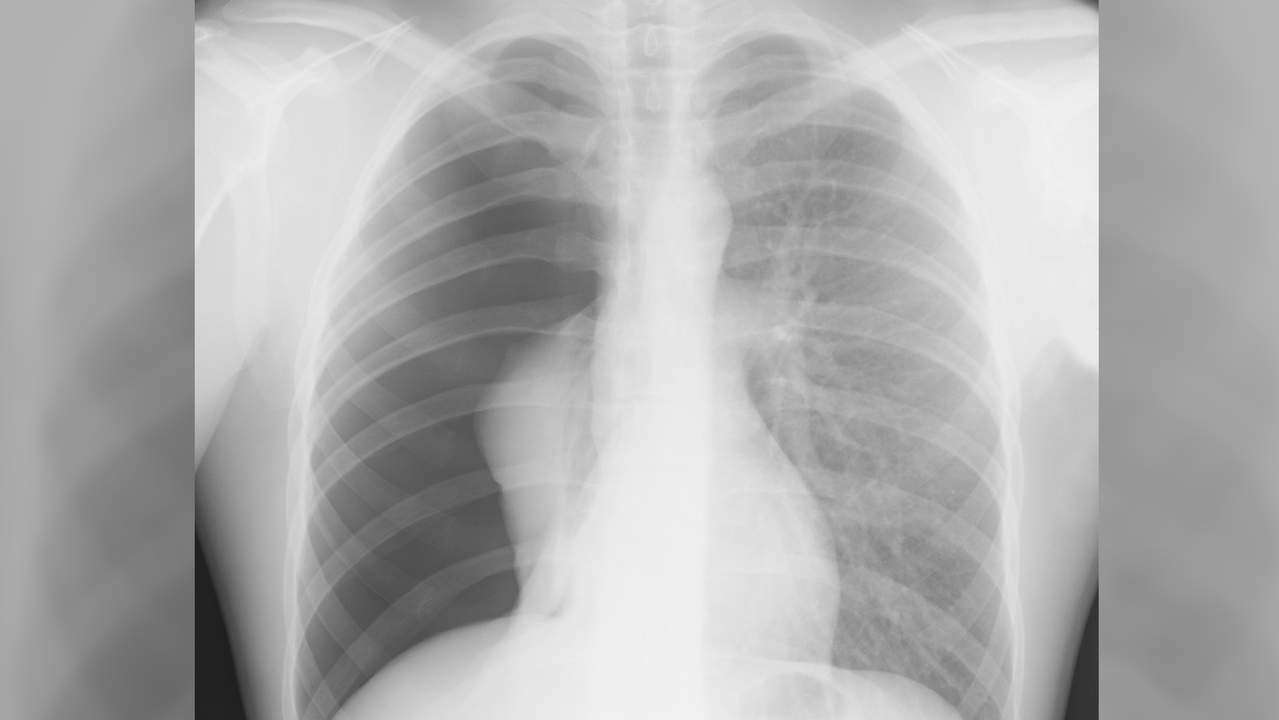
Image Source: https://medlineplus.gov/collapsedlung.html

Image Source: https://www.fairview.org/patient-education/85307

Image Source: https://radiopaedia.org/cases/hemithorax-white-out-lung-collapse

There are multiple reasons that could account for this

Pneumothorax – when air escapes from the lung. The air then fills the space outside of the lung, between the lung and chest wall. This build-up of air puts pressure on the lung, so it cannot expand as much as it normally does when you take a breath.

Mucus plugging – when the patient has an infection in the chest and is unable to cough out or expectorate the phlegm or sputum, the sputum can build up in the airways of the patient leading to loss of air supply or ventilation for the patient and hence collapse of the lung.

Pleural effusion – when there is fluid such as pleural fluid or blood or pus accumulation in the lining of the lungs, it eventually compresses the lung causing collapse.

The management is different in all three scenarios

Pneumothorax – this can be a medical emergency, especially if the patient is on a ventilator. A needle or a small tube needs to be inserted into the chest wall up to the lining of the lung to let the air out.

Mucus plugging – good physiotherapy along with nebulisation and mucus thining agents generally are sufficient. However, there may be instances where this is not sufficient, in which case, the doctor may need to do a bronchoscopy ( a small camera is inserted into the lungs through the mouth or nose) and mucus can be suctioned out through the scope.

Pleural effusion – the management is similar to that of pneumothorax.

#collapsed-lung, #mucus-plugging, #pleural-effusion, #pneumothorax

Dr. Nimish Shah

(Consultant Chest Physician) | MRCP (UK), MRCP (RESP) CCT - London UK, PG Cert Clin Ed (KCL, London)

More posts by Dr. Nimish Shah

Related Posts

  • Stroke

    By askadmin | 0 comment

    STROKE PAMPHELET A stroke is a sudden event that occurs resulting due to death of cells in the brain and results in any of the following symptoms. In common terms stroke is a paralysis attack.Read more

  • Bedsores (Pressure Ulcer)

    By Sis. Jyotshna Mohite | 0 comment

    GUIDE ON PRESSURE ULCERPressure Ulcers – A Guide for patient and caregivers PRESSURE ULCER Pressure ulcers may also be called bed sores or pressure sores or pressure injury Skin reddening that disappears after pressure isRead more

  • Venous Thromboembolism (VTE)

    By askadmin | 0 comment

    VENOUS THROMBOEMBOLISM (VTE) Image Source: https://desdaughter.com/2016/12/01/testosterone-treatment-and-risk-of-venous-thromboembolism/ Venous Thromboembolism (VTE) Venous thromboembolism or deep vein thrombosis (DVT) occurs when a blood clot (thrombus) forms in one or more of the deep veins in your body, usuallyRead more

  • Critical Illness Neuro-Myopathy

    By Dr. Azad Irani | 0 comment

    CRITICAL ILLNESS NEURO-MYOPATHY What is Critical Illness Neuro-Myopathy? Patients who a very ill in the ICU are at risk of developing severe weakness of limb muscles and of respiratory muscles. This is known as CriticalRead more

  • Complications of Immobilization

    By Dr. Reena Javkar | 0 comment

    COMPLICATIONS OF IMMOBILIZATION Prolonged bed rest and immobilization leads to complications which are much easier to prevent than to treat. Various causes of immobilization can be as follows: Enforced bed rest due to illness ParalysisRead more

2 comments

  • U H Thaker May 30, 2019 at 5:54 pm

    Hi, I wanted to ask when doctors can remove ventilator. My relative is on ventilator since 7 days and doctors saying he is a case of weaning failure. He had a stroke in brain stem and unconscious. Is tracheostomy mandatory in such cases?

  • Dr. Anand Bhabhor December 11, 2019 at 6:27 pm

    hi…
    Mr. Thaker..
    At the outset Doctor must have put the ventilator to support the breathing and tracheal toileting. Since the patient is still unconscious and he has suffered brain stem stroke. In such case he will need prolonged ventilatory support and tracheal toileting for which he will need tracheostomy. On the tracheostomy, it will be easy to remove ventilator if patient has good breathing efforts and chances of infection are also less.
    Any patient who needs prolonged ventilation should be consider for early tracheostomy for faster recovery.

Leave a Comment

Your email address will not be published. Required fields are marked *

1 × three =

© 2019 AskIntensivist | All Rights Reserved

Made With By WEBEDP
  • About
    • About Us
    • About Dr. Anand Bhabhor
    • History of ICU
    • Critical Care in Two Tier Cities in India
  • Procedures In ICU
    • Ascites Fluid Tapping
    • Arterial Blood Gas
    • Arterial Line Insertion
    • Bone Marrow Biopsy
    • Bronchoscopy
    • Central Line Insertion
    • Dialysis Port Insertion
    • EEG EMG NCS
    • Foley Catheter Insertion
    • Intubation
    • Lumbar Puncture
    • Percutaneous Endoscopic Gastrostomy
    • Pericardiocentesis
    • Peripheral Catheter Insertion
    • Pleural Fluid Tapping
    • Pulmonary Arterial Catheter Insertion (PA Cath)
    • Ryles Tube Insertion
  • Events In ICU
    • Bedsores (Pressure Ulcer)
    • Collapsed Lung
    • Complications of Immobilization
    • Critical Illness Neuro-Myopathy
    • Stroke
    • Venous Thromboembolism (VTE)
  • Common Care In ICU
    • Physiotherapy
  • Investigations In ICU
    • Digital Subtraction Angiography (DSA)
    • Radiology
  • FAQs
ASKINTENSIVIST